Customer story
“Just two to three minutes now”
How SchwörerHaus uses AI visualization in its architecture department and building consultancy – and how a first meeting at Groundbreakers turned into an innovation partnership.

Katrin Richter
Architecture department, SchwörerHaus
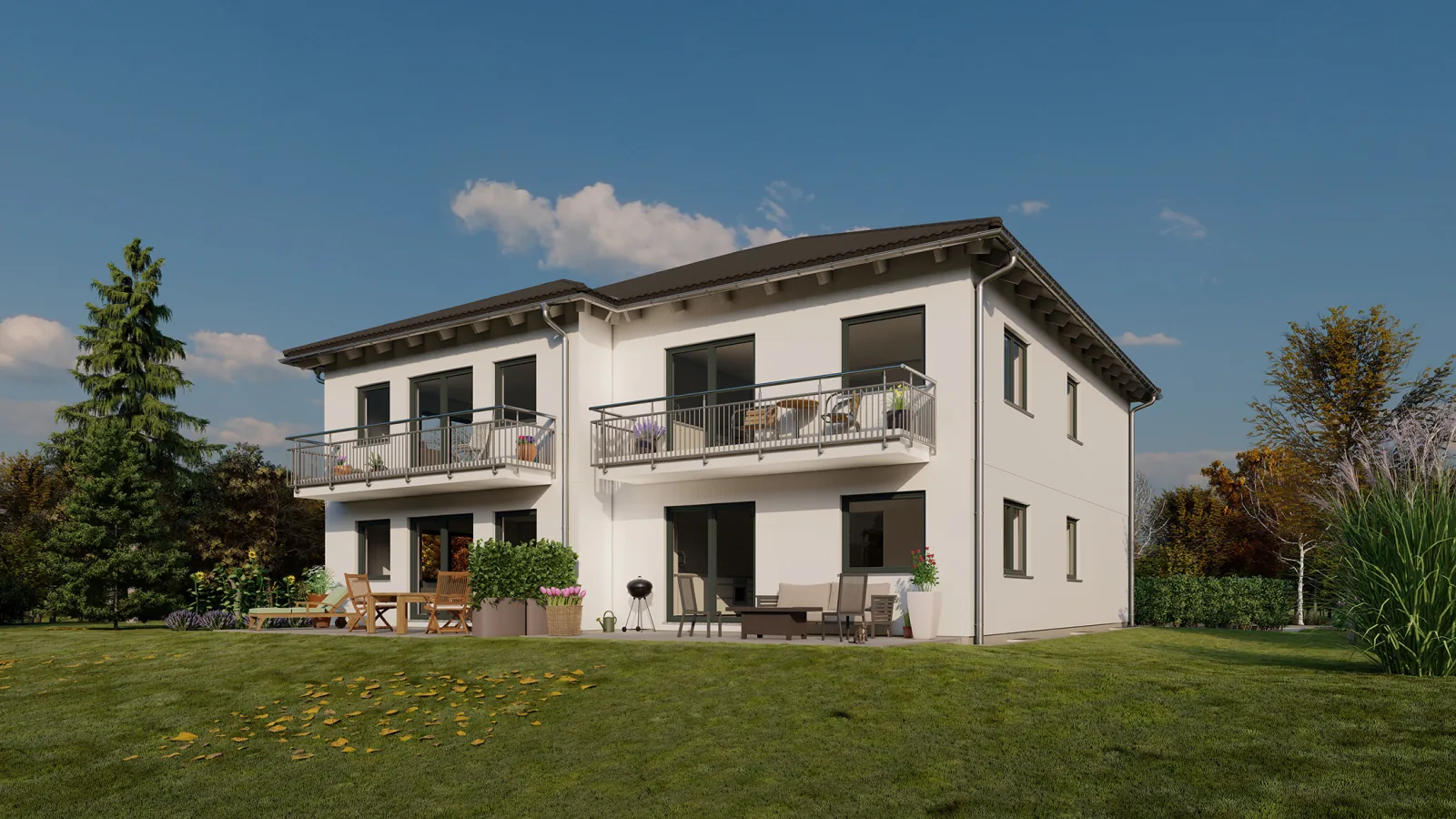
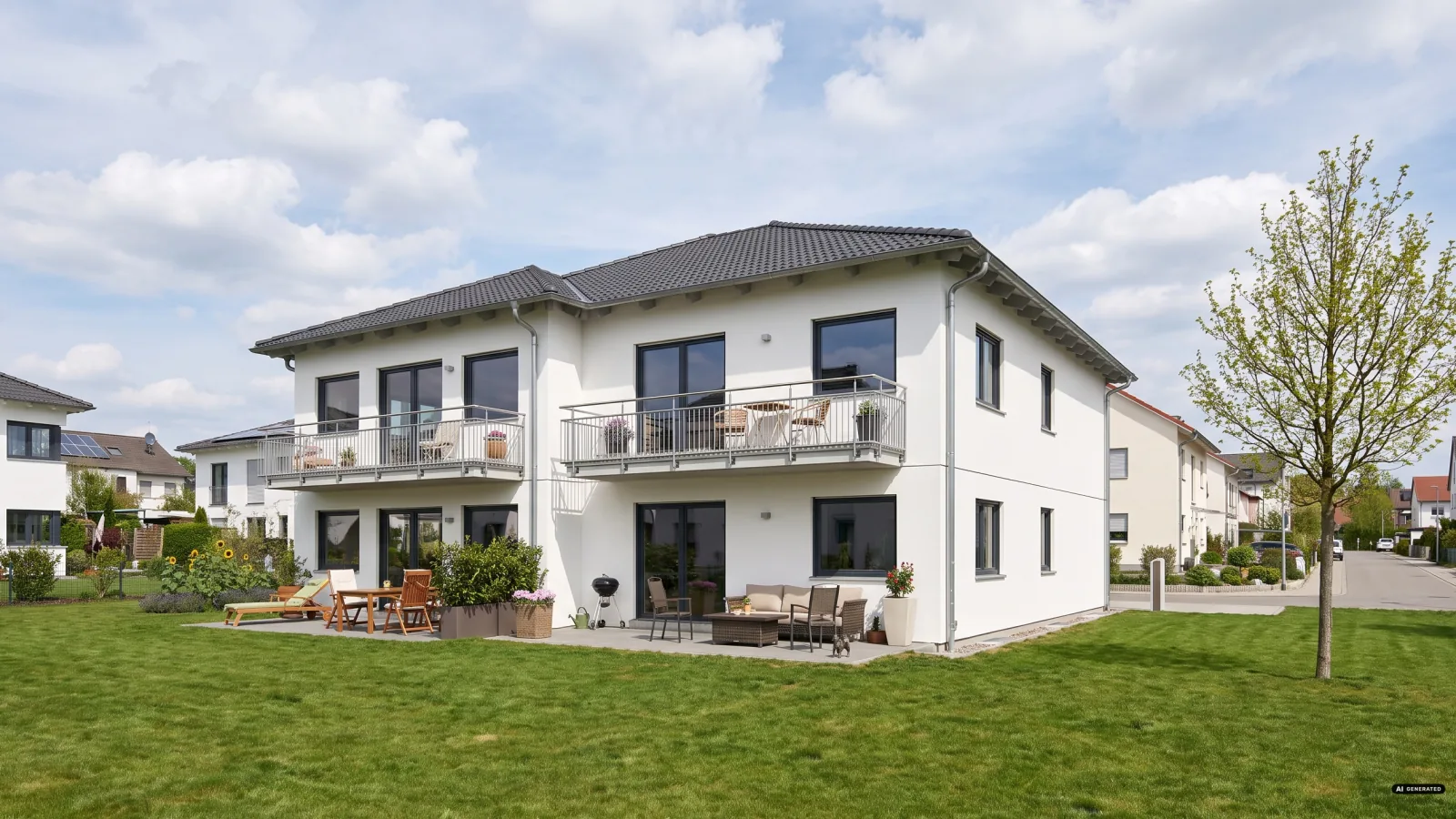 BeforeWith VisioPlan
In this interview, Philipp Lin of Groundbreakers talks to Kevin Fechner, CEO of the proptech start-up VisioPlan, and Katrin Richter from the architecture department of the renowned prefab home manufacturer SchwörerHaus. They share how a first meeting turned into a close innovation partnership, and how AI-powered rendering software is changing real estate marketing and the sale of building projects for good.
The interview was conducted in German. This is a translation.
“That initial scepticism disappeared extremely quickly”
How did your journey together actually begin?
Kevin Fechner: It started at a Groundbreakers event. There I got talking to Jochen Renner, plant manager of SchwörerHaus's main plant in Hohenstein. I told him about our AI solution, which turns CAD models or floor plans into photorealistic architectural visualizations in a few clicks. He saw the potential for sales straight away, and we set up a meeting.
Katrin, what did it look like from your side at SchwörerHaus?
Katrin Richter: After the event, Jochen Renner came to us in the architecture department and asked us to take a look at this contech start-up. At first we were quite sceptical and thought it was yet another company trying to sell us something we didn't need. But we agreed to a meeting, and that initial scepticism disappeared extremely quickly once we saw how simply and how well the AI rendering works.
How exactly did that first demo go?
Kevin Fechner: In our demo call I took a SchwörerHaus CAD model right away and rendered it through our AI live, in front of the people in charge. That let us show immediately what their prefab homes could look like in digital real estate marketing or in customer meetings. Afterwards we gave the department trial accounts with a credit system for our computing power, so they could test the platform thoroughly.
“The right building products”
After the trial, did you move straight to the full version, and how do you use the proptech tool today?
Katrin Richter: Yes, exactly. In our architecture department we now work with the AI software at three workstations, for example to design new brochures for multi-family homes or online publications. We also offer the system to our building consultants and architects, so they can use it directly in real estate marketing and when advising their customers.
Kevin Fechner: For the SchwörerHaus building consultants we also developed something special. Because the consultants are spread across Germany and often operate like independent entrepreneurs, they buy their own licences from us. But we built a shared library so that everyone can access SchwörerHaus's original materials and components. That way, the right building products always end up visualized on the 3D model.
“Deceptively real”
What makes VisioPlan's AI rendering better than your previous solutions, Katrin?
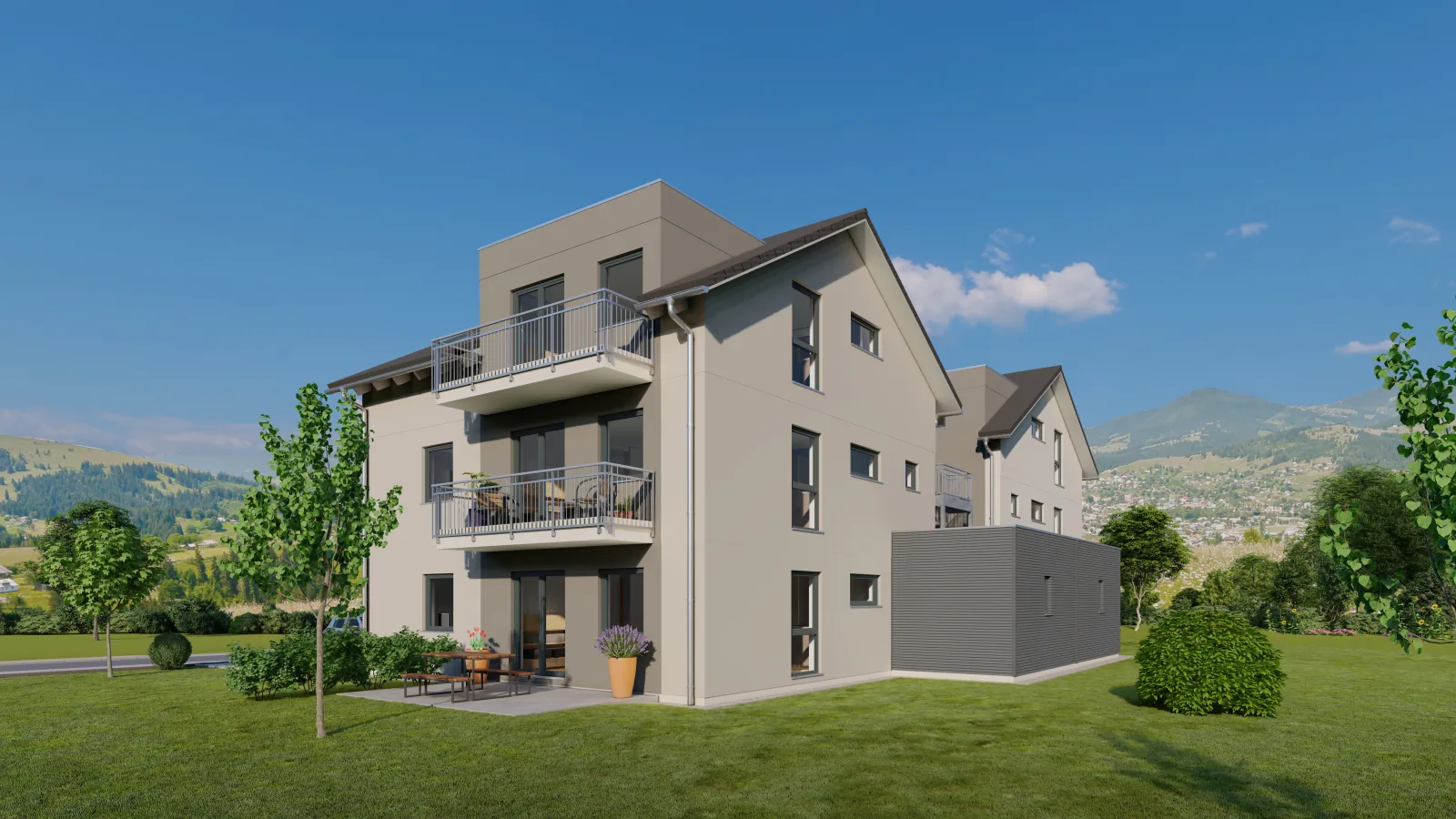
Katrin Richter: Above all, it's the incredible speed and the image quality. Before, we needed expensive high-end computers that could easily spend an hour of computing time on a single rendering. Because VisioPlan's proptech tool runs in the cloud, a rendering now takes just two to three minutes. And the images now look deceptively real. With our old programs you always saw small flaws, such as the lawn not blending cleanly into the terrace. Now the images are so realistic that, where the EU AI Act requires it, we add watermarks to point out that these are AI-generated visualizations. Customers are absolutely thrilled when they see their future home looking so true to life.
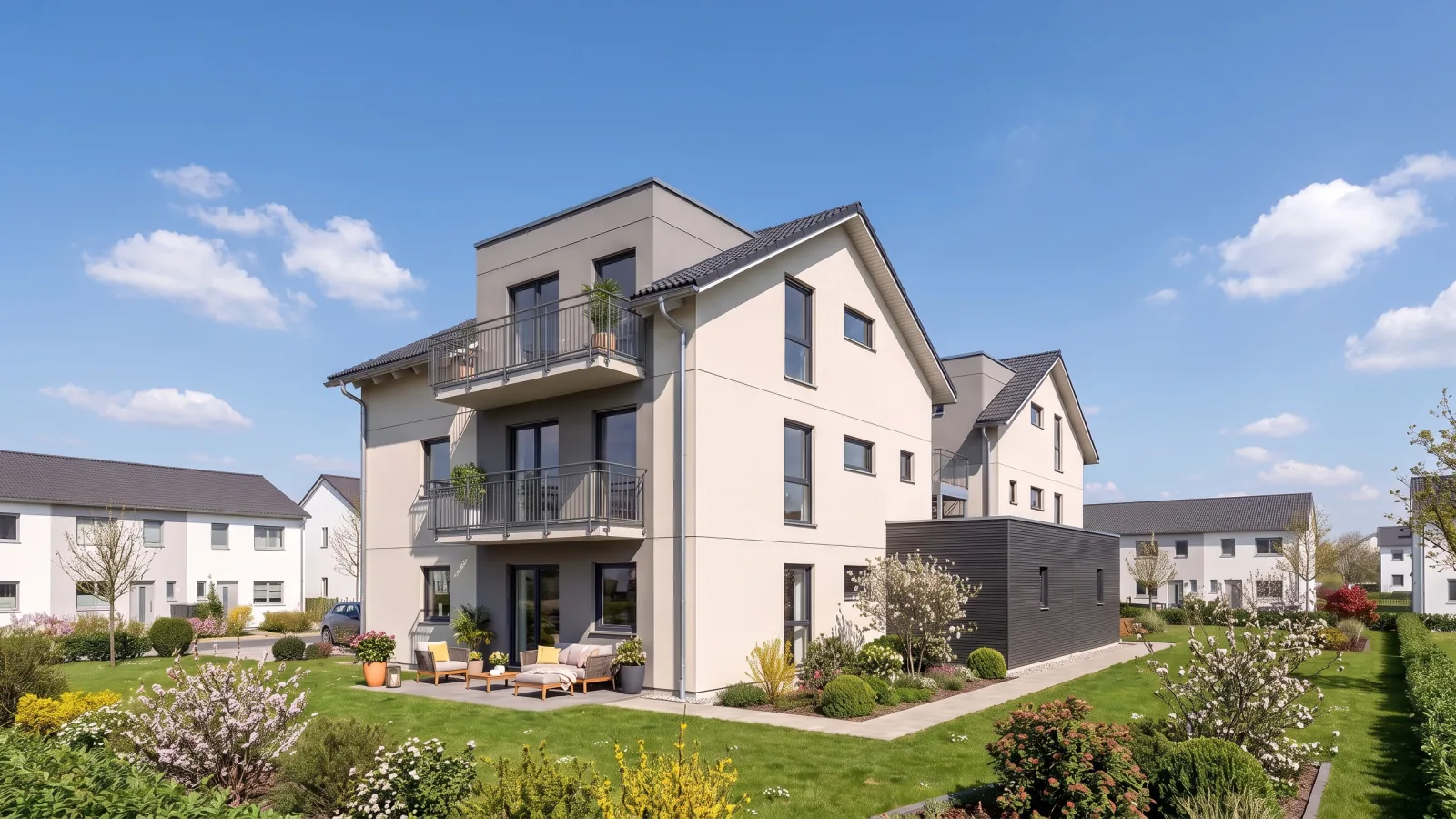 BeforeWith VisioPlan
“Truly worth its weight in gold”
Your collaboration sounds very agile. How do you find working with a fast-moving start-up compared with traditional software vendors?
Katrin Richter: It's fantastic. Recently our advertising department needed images in a much higher resolution for a brochure. I asked Kevin whether the images couldn't simply be "rendered up". Barely a day later he got back to me and had built an upscale function into the software. Having someone on hand who thinks along this quickly and finds solutions is truly worth its weight in gold in our industry.
Kevin Fechner: Customer feedback like that is the most important thing of all for us. We don't see it as annoying tickets, but as valuable information for building our AI solution so that it fits seamlessly into users' processes and is fun to use. Based on this feedback we keep releasing new updates – right now, for example, major improvements to 3D floor plan visualization, to eliminate quality loss in image editing completely.
“From work stage 0 to the final sale”
Kevin, you're developing rapidly. Where is VisioPlan heading in the future?
Kevin Fechner: Our core right now is photorealistic and abstract visualization. But our vision goes much further: we want to accompany real estate project development from work stage 0 – the very first idea – to the final sale. In future we no longer see AI visualization as just a nice picture for a construction sign, but as a central data point. It becomes a shared language for everyone involved – whether architects, clients or public participation in public projects.
That sounds like a very holistic approach. Do you already have concrete solutions in the pipeline?
Kevin Fechner: Absolutely. We've just rolled out updates that fix typical teething troubles of the industry – such as "generation loss", the loss of quality when an image is edited repeatedly in the software. That no longer happens with us. We're also working on automations that let us retrieve land parcels in early project phases and visualize AI-generated massing cubes on the site. That gives our customers impressive visualizations and a basis for decisions even before any detailed building has been designed. Our goal is that, in future, users only have to make strategic decisions while our AI does the hard detail work.
“A foot in the door”
Is there anything you'd like to add in closing?
Kevin Fechner: I'd like to say a big thank you to Groundbreakers. The proptech and contech market is currently flooded with start-ups, which makes it hard for established companies in the construction sector to filter out the really good solutions. Your pre-selection takes an incredible amount of work off companies' hands and gives start-ups like us the chance to get a foot in the door at all, so we can carry out great pilot projects like this in prefab home construction.
Katrin Richter: I can only agree. It's great that you do this groundwork for us. Thank you very much.